
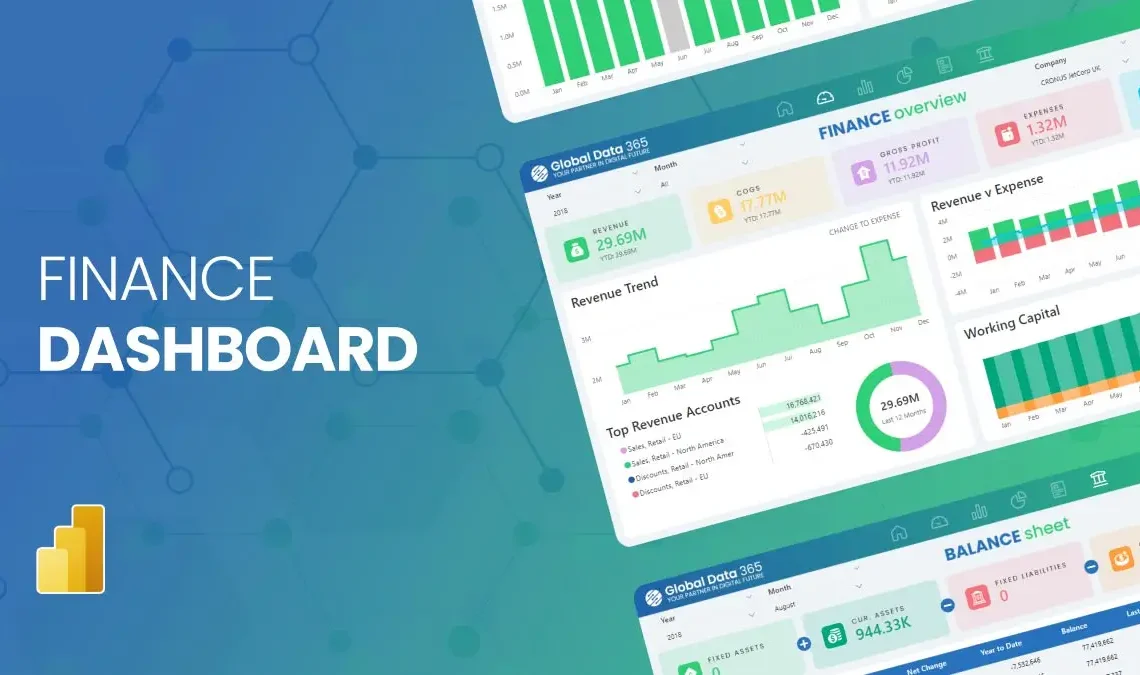
Executives are expected to make high-impact decisions quickly, often with incomplete or fragmented information. Spreadsheets, static reports, and delayed updates can slow judgment and increase risk. Financial dashboards solve this problem by converting complex financial data into clear, real-time insights that support faster, more confident leadership decisions.
When designed correctly, dashboards become a strategic asset rather than a reporting tool.
Why Executives Struggle With Traditional Financial Reporting
Legacy financial reporting methods were built for accuracy, not agility. While they serve compliance needs, they often fail to support executive-level thinking.
Common challenges include:
-
Delayed data availability, making decisions reactive instead of proactive
-
Overloaded reports that bury insights under excessive detail
-
Inconsistent metrics across departments
-
Limited visibility into trends, risks, and performance drivers
Executives need clarity, not complexity. Financial dashboards address this gap.
What Makes Financial Dashboards Executive-Ready
Not all dashboards are built for leadership use. Executive dashboards focus on high-level performance indicators rather than operational detail.
Key characteristics include:
-
Real-time or near-real-time data updates
-
Clear visualizations that highlight trends and exceptions
-
Strategic KPIs aligned with business objectives
-
Drill-down capability without overwhelming the primary view
This balance allows executives to stay informed while maintaining strategic perspective.
Faster Decision-Making Through Real-Time Visibility
Timing often determines the success of executive decisions. Financial dashboards reduce decision latency by presenting current data in an instantly understandable format.
This enables leaders to:
-
Identify revenue or margin shifts as they occur
-
Respond quickly to cost overruns or cash flow pressure
-
Adjust forecasts based on live performance data
-
Make informed calls without waiting for end-of-month reports
Speed, paired with accuracy, becomes a competitive advantage.
Improved Strategic Alignment Across Leadership Teams
Executives frequently operate with different views of financial performance. Dashboards create a shared source of truth.
Benefits of unified visibility include:
-
Aligned decision-making across finance, operations, and strategy
-
Reduced debate over data accuracy
-
Clear accountability for financial outcomes
-
Consistent performance tracking across business units
When leadership teams see the same metrics, conversations shift from interpretation to action.
Enhanced Risk Awareness and Early Warning Signals
Financial dashboards do more than report performance—they highlight emerging risks.
Executives gain early alerts on:
-
Declining liquidity or tightening cash positions
-
Margin erosion across products or regions
-
Budget deviations before they escalate
-
Exposure to currency, credit, or operational risks
This proactive visibility allows leaders to mitigate issues early rather than manage crises later.
Better Forecasting and Scenario Evaluation
Modern dashboards often integrate forecasting models and scenario analysis, helping executives evaluate options before committing resources.
This supports:
-
More reliable financial projections
-
What-if analysis for pricing, expansion, or cost changes
-
Informed capital allocation decisions
-
Stronger long-term planning confidence
Executives can test assumptions visually instead of relying solely on static models.
Increased Confidence in Board-Level Communication
Clear financial dashboards improve how executives communicate with boards and investors.
They enable:
-
Concise explanations of financial performance
-
Visual storytelling that supports strategic narratives
-
Faster responses to board questions
-
Greater credibility through transparent data presentation
When leaders understand the numbers deeply, they communicate with authority.
Best Practices for Building Effective Financial Dashboards
To maximize executive value, dashboards should be built with intention.
Best practices include:
-
Limit metrics to what truly drives decisions
-
Use consistent definitions and data sources
-
Design for clarity over decoration
-
Review dashboards regularly to ensure relevance
A dashboard should evolve as business priorities change.
FAQ
What financial metrics are most useful for executive dashboards?
Revenue growth, profitability, cash flow, operating expenses, and key efficiency ratios are commonly prioritized, depending on business goals.
How often should executive financial dashboards be updated?
Ideally in real time or daily, though some strategic metrics may update weekly or monthly.
Can small businesses benefit from financial dashboards?
Yes. Even lean organizations benefit from clearer visibility into cash flow, margins, and performance trends.
How do dashboards differ from traditional financial reports?
Dashboards focus on visual, high-level insights, while reports provide detailed historical data and compliance documentation.
Do financial dashboards replace finance teams’ analysis?
No. Dashboards support decision-making but do not replace professional judgment or deeper financial analysis.
What risks come from poorly designed dashboards?
Overloading metrics, inconsistent data, or unclear visuals can lead to confusion and misinformed decisions.
Who should be involved in designing executive dashboards?
Finance leaders, executives, and data teams should collaborate to ensure accuracy, relevance, and usability.