


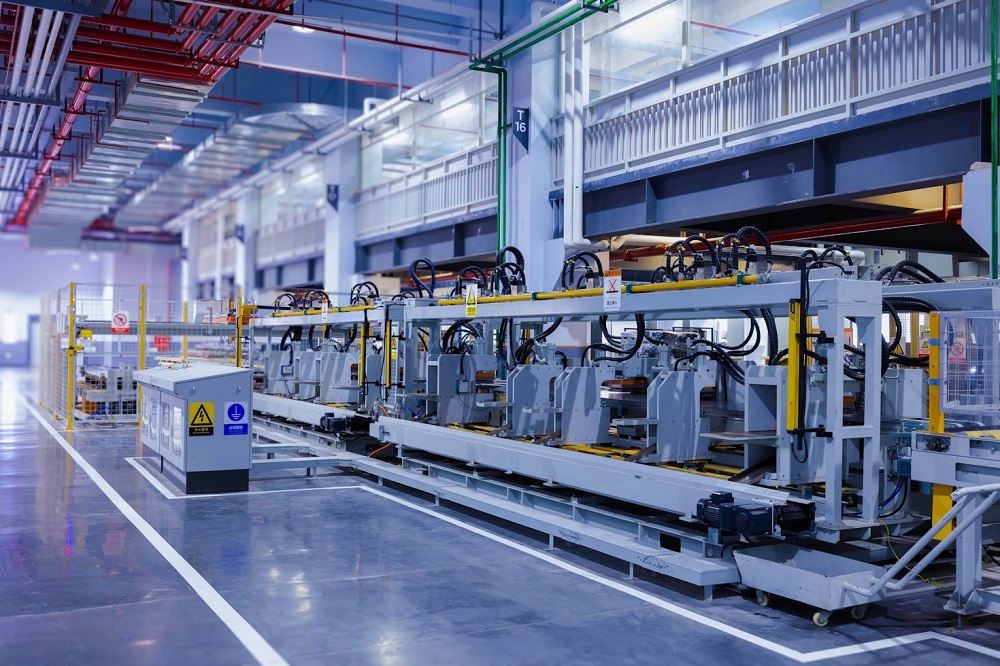
The concept of industrial productivity has undergone several major shifts over the past few centuries. During the first industrial revolutions, output was determined by physical human labor, mechanical steam power, and early assembly line frameworks. For generations, improving manufacturing capacity meant adding more floor space, hiring more workers, or running machines for longer shifts.
As market demands become more volatile and global supply chains encounter constant disruptions, the traditional approach to scaling production has hit a wall. Modern industrial growth is no longer a matter of simply increasing raw inputs. Instead, the focus has shifted entirely to technological efficiency, physical precision, and software intelligence. The rapid integration of industrial automation is completely re-engineering how physical goods are produced, packaged, and distributed globally. By removing human error from repetitive tasks, optimizing mechanical performance through data networks, and establishing highly adaptable production workflows, automation is redefining the baseline metrics of global industrial productivity.
The Evolution to Intelligent Automation
To understand the profound nature of this industrial transformation, it is necessary to look past basic mechanical automation. Simple automation, which became mainstream during the mid-twentieth century, relies on fixed, pre-programmed logic. A robotic arm programmed to weld a specific car door joint will execute that exact task millions of times with perfect repeatability. However, if the car door arrives slightly out of position, or if the model changes, the traditional machine fails or jams, requiring extensive human intervention to retool and reprogram the system.
Modern industrial automation incorporates advanced sensors, internet of things connectivity, and adaptive software algorithms. This combination creates intelligent automation, where physical machinery can perceive its immediate environment, share data across a factory floor network, and make real-time contextual adjustments to optimize performance.
The Role of Edge Computing and Sensor Networks
Intelligent factory floors are embedded with massive arrays of specialized sensors tracking variables like acoustic vibrations, thermal outputs, fluid pressures, and micro-second timing intervals. Instead of routing this vast sea of data to distant cloud servers for processing, modern automation utilizes edge computing, which processes information directly on the factory floor near the physical machine. This eliminates data latency, allowing automated systems to detect subtle mechanical deviations and execute corrective adjustments in a fraction of a millisecond, preventing defects before they happen.
The Structural Elimination of Operational Friction
The deployment of advanced automation directly targets the root causes of industrial waste and inefficiency, fundamentally changing the cost and output structure of modern operations.
Achieving 24/7 Production Continuous Flow
The most obvious limitation of a human-dependent workforce is the physical requirement for rest, shift changes, vacations, and safety breaks. When an industrial facility relies heavily on manual execution, production occurs in lumpy, interrupted blocks. Intelligent automated systems can operate continuously for days or weeks without interruption. This maximizes asset utilization rates and allows companies to fulfill large volume orders with exceptionally predictable timelines, entirely independent of local labor availability.
Transforming Maintenance from Reactive to Predictive
Unplanned equipment downtime is one of the most expensive drains on industrial productivity. Historically, maintenance followed a rigid calendar schedule or occurred reactively after a major component failed completely, paralyzing the entire assembly line.
Industrial automation platforms solve this issue through predictive maintenance workflows:
-
Continuous Structural Diagnostics: Software continuously monitors the baseline mechanical resonance and friction levels of active machinery.
-
Early Failure Forecasts: By identifying microscopic wear patterns that are completely invisible to human inspectors, the system predicts the exact remaining operational life of a component.
-
Automated Service Alignment: The automation platform automatically updates maintenance logs, orders the necessary replacement part through the supply chain, and schedules maintenance during natural production lulls, preventing catastrophic assembly line stoppages.
Computer Vision and Absolute Quality Assurance
Manual quality inspection is inherently flawed, as human eyes tire over long shifts, leading to missed defects that result in costly product recalls and brand damage. Advanced automation integrates high-resolution computer vision systems equipped with specialized deep learning models. These cameras inspect products moving down high-speed assembly lines at a rate of dozens of items per second, scanning for microscopic structural cracks, surface blemishes, or dimensional variations. Defective units are automatically flagged and removed from the line by pneumatic sorting mechanisms without breaking the rhythm of production.
Hyper-Flexibility and Single-Unit Customization
For decades, the ultimate challenge of manufacturing was the trade-off between volume and variety. Mass production lines achieved massive economies of scale by churning out millions of identical items, but customizing a product required shutting down the entire assembly line for days to physically swap out heavy stamping dies, molds, and material routing lines.
Advanced industrial automation has completely broken this historical barrier, ushering in the era of high-mix, low-volume hyper-customization at mass-production costs.
Decoupling the Factory Floor via Autonomous Intralogistics
Traditional factories rely on long, rigid conveyor systems that dictate a fixed sequence of assembly steps. Modern automated facilities are dismantling these linear structures in favor of decentralized manufacturing cells.
This agility is powered by advanced robotics and autonomous mobile units:
-
Autonomous Mobile Robots: Self-driving robotic carts navigate dynamic factory floors independently, using laser guidance systems to transport raw components to specific workstations on demand, automatically routing around traffic bottlenecks.
-
Smart Grippers and Soft Robotics: Robotic arms equipped with adaptive tactile sensors can switch from lifting heavy metallic engine blocks to handling delicate glass or flexible packaging materials without requiring manual tool changes.
-
Instant Software Retooling: When a new product variant enters the production queue, the central control system pushes updated digital instructions to individual machines instantly, altering laser cutting paths or assembly torque levels on the fly without a single minute of downtime.
Redefining the Industrial Labor Force
The swift expansion of automation has caused deep anxiety regarding the wholesale displacement of human labor. While it is true that routine, repetitive, and physically hazardous roles are rapidly being phased out, automation is fundamentally shifting the nature of industrial work rather than eliminating human value.
The industrial workspace is transitioning toward human-machine collaboration, frequently referred to as the industry-five-point-zero paradigm. Human professionals are moving away from dirty, dangerous, and repetitive physical execution and stepping into roles focused on strategic orchestration, data analysis, and technical optimization. Workers manipulate collaborative robots that work safely outside traditional metal cages, using spatial awareness algorithms to assist humans with heavy lifting while the human operator focuses on high-precision tasks or custom finishes. The modern factory worker is evolving into a systems analyst who monitors digital dashboards, configures automated logic flows, and troubleshoots interconnected software networks.
Frequently Asked Questions
What is the difference between fixed automation and programmable automation?
Fixed automation, often called hard automation, utilizes custom-engineered mechanical hardware designed to execute a single, highly specific task at maximum volume and speed. Changing the product design requires physically dismantling or re-engineering the machinery. Programmable automation is built with digital control systems, allowing the physical behavior, tool paths, and processing sequences of the machine to be altered completely by uploading a new software program, making it ideal for variable product lines.
How does industrial automation impact a company’s carbon footprint and sustainability goals?
Industrial automation directly drives sustainability by eliminating operational waste and resource inefficiencies. Automated systems optimize energy consumption by scaling down the electricity draw of heavy motors and facility climate controls during idle periods. Furthermore, by maintaining precise control over raw material usage, automation drastically reduces scrap rates, minimizes chemical waste, and limits water consumption across processing industries.
What is a programmable logic controller, and why is it vital to an automated factory?
A programmable logic controller is a ruggedized industrial computer designed to withstand harsh factory environments, including extreme temperatures, dust, moisture, and electrical noise. It acts as the localized brain of an automated machine, continuously monitoring input data from field sensors, evaluating that data against programmed logic parameters, and executing precise output commands to actuators, motors, and valves to manage the mechanical process safely.
How do automated systems handle cybersecurity threats on the production floor?
Protecting an automated factory floor requires a comprehensive operational technology security strategy. Because factory machines are increasingly connected to corporate data networks, companies implement strict network segmentation to completely isolate production software from standard office networks. This is paired with encrypted data protocols, continuous AI-driven network monitoring to detect anomalous traffic patterns, and multi-factor hardware keys to prevent unauthorized changes to core machine code.
What is the difference between traditional industrial robots and collaborative robots?
Traditional industrial robots are massive, heavy machines that operate at high speeds along fixed paths, lacking any awareness of their human surroundings. They must be isolated inside heavy metal safety cages because any human contact would result in severe injury. Collaborative robots, or cobots, are engineered with built-in force-limiting sensors, soft edges, and proximity vision systems that allow them to detect human presence, automatically slowing down or stopping instantly upon light contact to ensure a completely safe, open workspace.
How can capital-constrained businesses calculate the true return on investment for automation?
To calculate the true return on investment for an automation upgrade, an enterprise must look past simple labor cost savings. The financial model must capture qualitative and secondary financial metrics, including the total reduction in raw material scrap, the elimination of field product defects and warranty claims, lower insurance premiums due to improved workplace safety, and the expanded revenue capacity unlocked by running operations continuously without labor-related stoppages.