
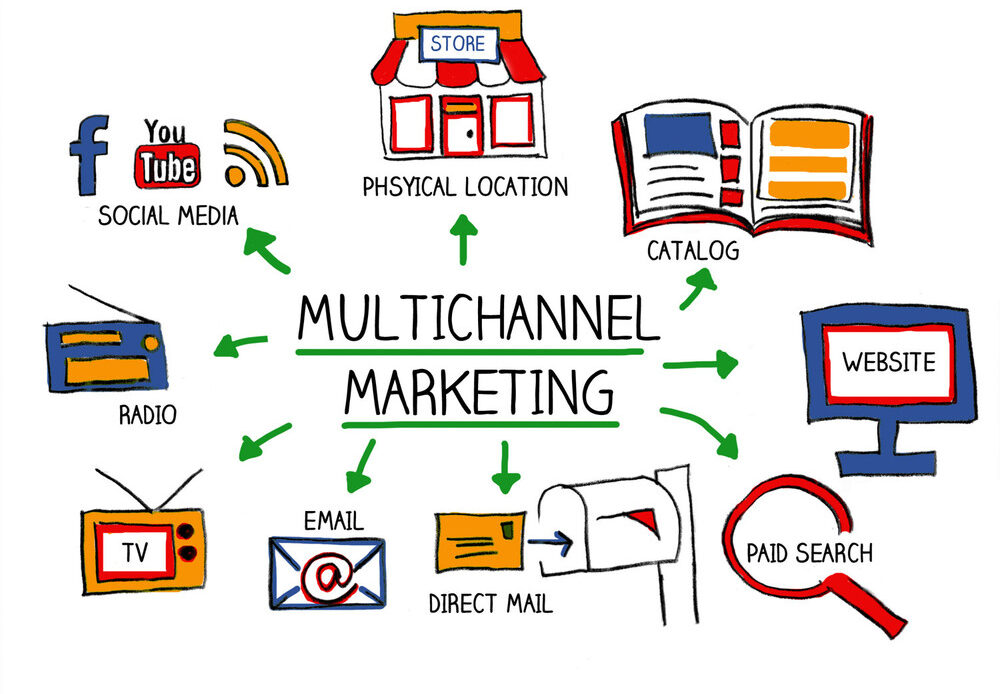
Marketing across multiple channels has become standard for modern businesses. Websites, social media, email, search ads, and offline touchpoints all play a role in reaching customers. However, running campaigns on many platforms does not automatically lead to better results. Without clear brand direction, multi-channel efforts often become fragmented and ineffective. Brand clarity is what turns scattered activity into a unified, high-performing marketing system.
What Brand Clarity Really Means in Marketing
Brand clarity goes beyond logos and taglines. It reflects how well a company understands and communicates its identity at every customer touchpoint. A clear brand answers essential questions consistently.
Brand clarity includes:
-
Core purpose and values
-
Target audience definition
-
Brand voice and tone
-
Visual identity guidelines
-
Key messaging themes
When these elements are clearly defined, marketing teams can make faster, better decisions across all channels.
Why Multi-Channel Campaigns Struggle Without Brand Clarity
Many multi-channel campaigns fail not because of poor execution, but because of inconsistent messaging. Different teams or agencies often interpret the brand in their own way.
Common problems caused by weak brand clarity:
-
Conflicting messages across platforms
-
Visual inconsistency between campaigns
-
Confusing customer experiences
-
Diluted brand recognition
-
Lower trust and engagement
When customers see mixed signals, they hesitate. Clarity removes that friction.
How Brand Clarity Creates Consistent Messaging Across Channels
Consistency is one of the biggest advantages of strong brand clarity. Each channel may require a different format, but the core message stays aligned.
With clear brand guidelines, teams can:
-
Adapt messages without changing meaning
-
Maintain the same tone across paid, owned, and earned media
-
Ensure visuals reinforce recognition
-
Align promotional and educational content
This consistency helps customers recognize the brand instantly, regardless of where they encounter it.
The Role of Brand Clarity in Audience Trust and Recall
Trust is built through repeated, predictable experiences. Brand clarity ensures customers know what to expect from every interaction.
Clear branding improves trust by:
-
Reducing confusion in communication
-
Reinforcing credibility over time
-
Creating familiarity across platforms
-
Supporting long-term brand recall
When customers repeatedly see the same values and promises expressed clearly, confidence grows.
Improving Campaign Efficiency Through Clear Brand Direction
Brand clarity also has internal benefits. Teams spend less time debating creative direction and more time executing.
Operational advantages include:
-
Faster campaign launches
-
Fewer revisions and rework cycles
-
Easier onboarding for new marketers or agencies
-
Better collaboration across departments
Clear direction reduces decision fatigue and keeps campaigns focused on outcomes rather than interpretation.
How Brand Clarity Supports Personalization at Scale
Personalization is essential in multi-channel marketing, but it must remain on-brand. Clear guidelines allow marketers to tailor messages without losing identity.
Brand clarity enables personalization by:
-
Defining boundaries for tone and messaging
-
Allowing flexibility within a consistent framework
-
Supporting audience-specific adaptations
-
Maintaining coherence across segments
This balance ensures personalized campaigns still feel connected to the same brand.
Strengthening Long-Term Campaign Performance
Multi-channel success is rarely achieved in a single campaign. It is built over time through repetition and refinement. Brand clarity provides the stable foundation required for long-term performance.
Over time, clear branding leads to:
-
Higher campaign recognition
-
Better cross-channel attribution
-
Improved customer loyalty
-
Stronger competitive positioning
Without clarity, even well-funded campaigns struggle to build momentum.
How Businesses Can Improve Brand Clarity for Marketing Teams
Improving brand clarity is a practical process, not a creative exercise alone.
Key steps include:
-
Documenting brand guidelines clearly and simply
-
Aligning leadership on brand priorities
-
Auditing existing channels for inconsistencies
-
Training teams and partners regularly
-
Updating guidelines as the business evolves
Clear documentation turns brand intent into everyday execution.
FAQs
How does brand clarity affect marketing ROI?
Clear branding improves message consistency, which increases engagement, conversion rates, and long-term campaign effectiveness.
Can small businesses benefit from brand clarity in multi-channel marketing?
Yes. Clear branding helps small teams avoid wasted effort and present a professional, consistent presence across all platforms.
Is brand clarity more important than channel selection?
Both matter, but clarity ensures that whichever channels are used deliver a unified and effective message.
How often should brand guidelines be updated?
Guidelines should be reviewed annually or whenever there are major shifts in strategy, audience, or positioning.
Does brand clarity limit creative freedom?
No. It provides a framework that allows creativity while maintaining consistency and focus.
How can companies measure the impact of brand clarity?
Metrics such as brand recall, engagement consistency, customer trust indicators, and cross-channel performance trends can offer insights.
Who is responsible for maintaining brand clarity in marketing teams?
Leadership sets direction, but marketing managers and brand owners are responsible for ensuring daily alignment across campaigns.